The eye behind
20 Olympians.
Now coaching the world.
For 28 years Dave Wollman built one of the best track & field programs in America. Today he coaches throwers and coaches everywhere — one video at a time.
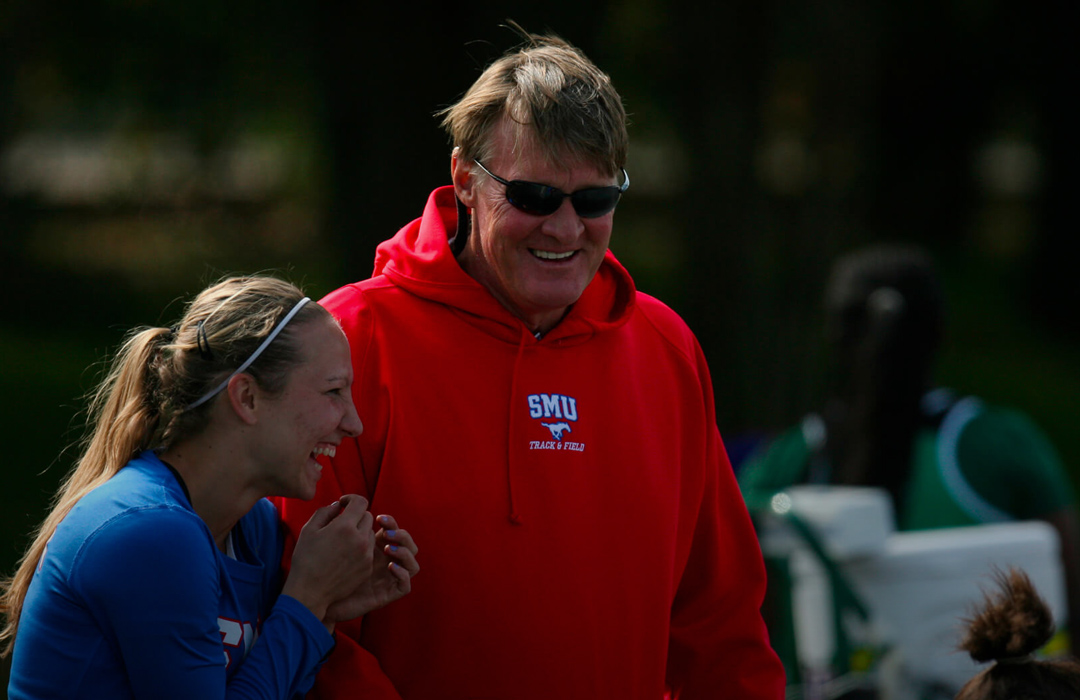
A lifetime of getting other people to the podium
As a young athlete, Dave Wollman refused to chase the Olympics the way many of his era did — with shortcuts. So he made a different promise: he would get his athletes there instead, through technique, discipline, and relentless work. He kept it.
A graduate-school discovery of biomechanics and kinesiology at Purdue became a coaching philosophy — technical mastery over brute strength. He carried it to Stanford, producing national champions and Olympians, and at just 30 was hired to lead SMU.
Over 28 years on the Hilltop he built all six programs — men’s and women’s indoor & outdoor track and cross country — into national contenders. From 1995–2004, SMU became one of only two Division-I programs in the country to win top-four NCAA team trophies in all four track & field events.
He is one of only three U.S. coaches ever named “Master Coach” by both the American and European associations. In 2024, SMU inducted him into its Athletics Hall of Fame.
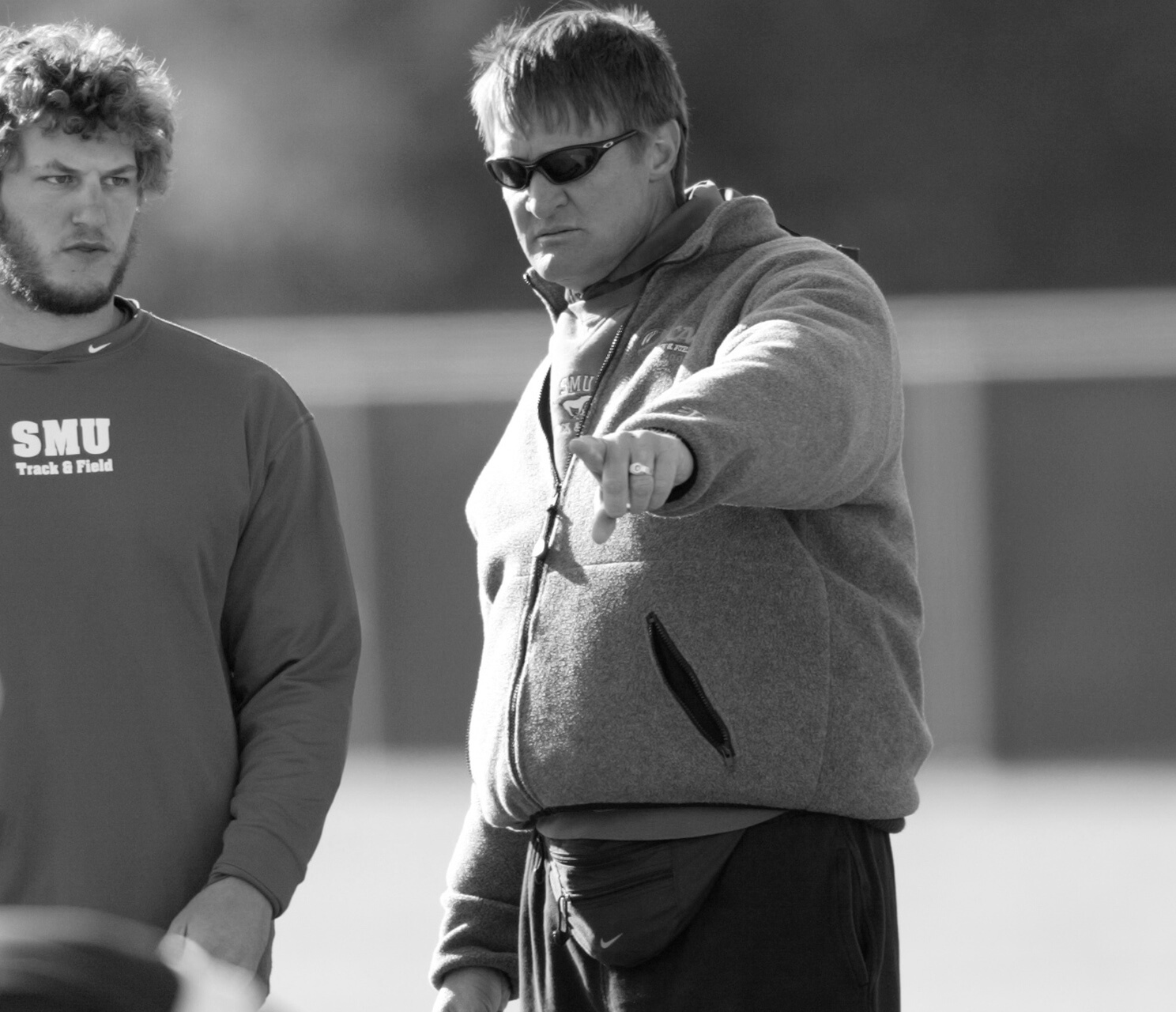
World-class throws coaching, wherever you are
You don’t have to be at SMU to be coached by the man who built it. Film your throws, send them in, and get back the eye that produced 20 Olympians — plus the guidance to take your training, and your recruiting, to the next level.
Video Analysis
Send your throws and receive a detailed, frame-by-frame breakdown — the exact technical corrections that turn good throwers into champions. Ongoing monthly coaching for athletes from middle school through college.
Live 1-on-1 Sessions
For athletes who learn best in real time — live online sessions to get over a technical hump, build a training plan, and stay motivated for the hard work ahead.
Recruiting Guidance
Honest analysis of college programs and coaches, warm introductions, and exposure to the hundreds of college coaches who follow Dave’s work — the bridge from talented thrower to scholarship athlete.
Technique is the shortcut
“The country was immersed in getting bigger and stronger. I went about it differently — more technical training, less reliance on the weight room. I wanted to prove that unnatural strength and size weren’t necessary to reach the pinnacle in track and field.”
— Dave Wollman
More than analysis — a champion’s standard
Results that travel
Athletes under Dave’s coaching have earned scholarships, become nationally ranked, and walked on at the next level — from middle-school beginners to elite throwers.
A coaching tree of champions
Eight assistant coaches over 27 years — including Olympic gold medalist Louise Ritter — and five went on to lead their own Division-I programs.
The whole athlete
Founder of SMU’s Academic Development for Student-Athletes (ADSA). Dave coaches the person, not just the throw — technique, mindset, and the discipline that lasts a lifetime.
The same analysis every athlete gets
Film a throw, send it in — and get back a frame-by-frame breakdown from the coach behind 20 Olympians. A few of Coach’s recent ones:
Talk’n Throws with Dave Wollman
Decades of throws wisdom, Texas style — technique, training, and the stories behind a Hall-of-Fame career. For throwers and coaches who want to think deeper about the craft.
Talk’n Throws
Master Coach. Hall of Famer. 28 years at the helm of SMU Track & Field. In Talk’n Throws, Dave shares the technical insight and hard-won philosophy behind a career that produced 20 Olympians and 34 NCAA champions.
Ready to throw farther?
Whether you’re a young thrower chasing a scholarship or a coach who wants a second eye, Dave is taking a limited number of new athletes. Tell him about your goals.
Email Coach Wollman